| Butterfly Conservation |  |
| 40 years of saving butterflies, moths and our environment |
| Butterfly Conservation | |
| 40 years of saving butterflies, moths and our environment |

|
|
|
FIELD TRIP REPORTS 2011/12
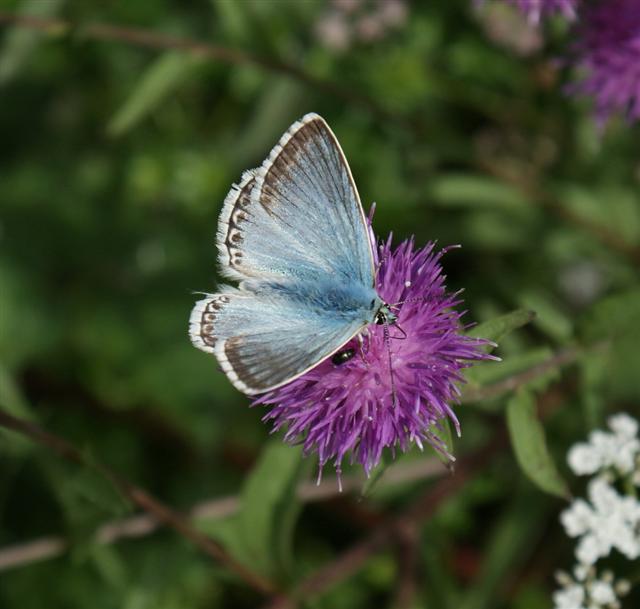
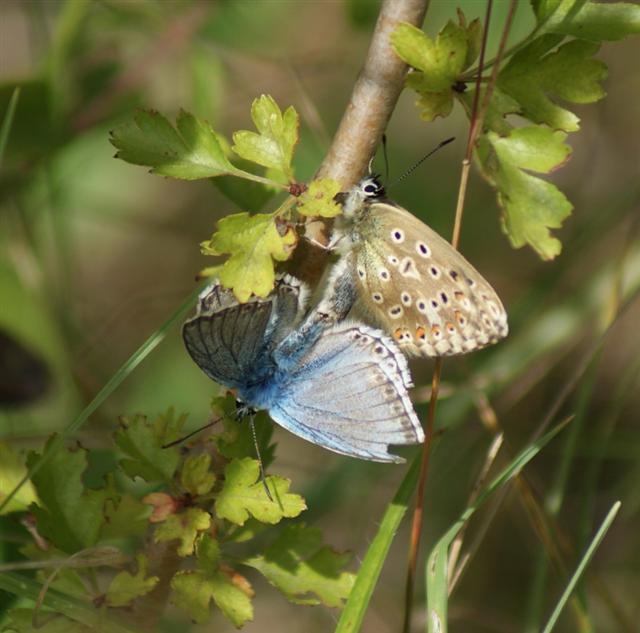
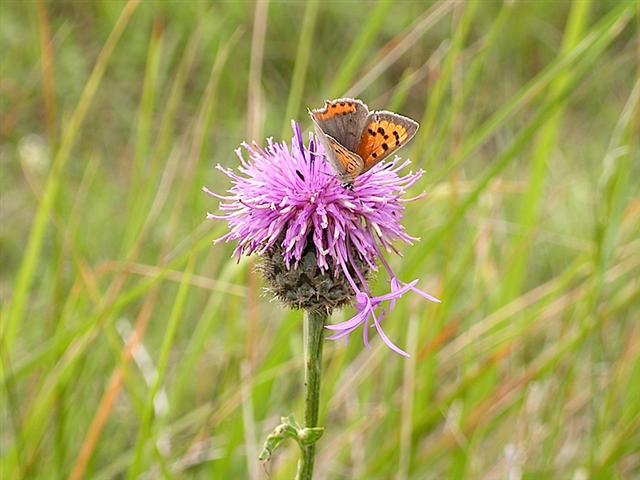
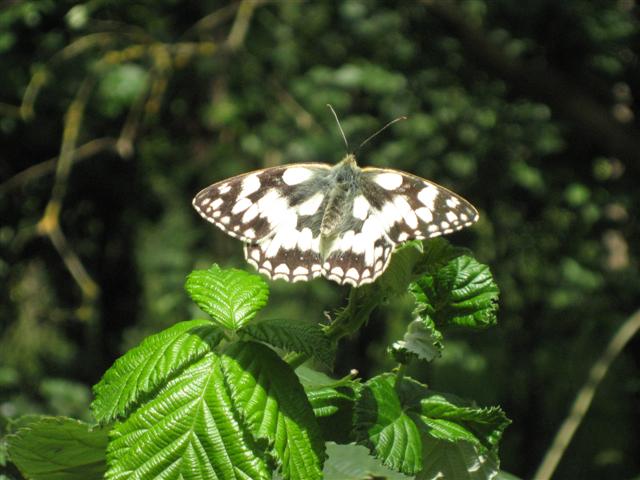
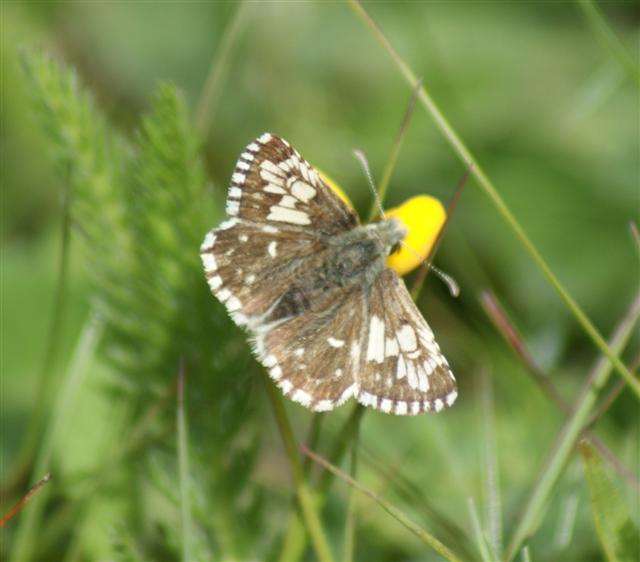
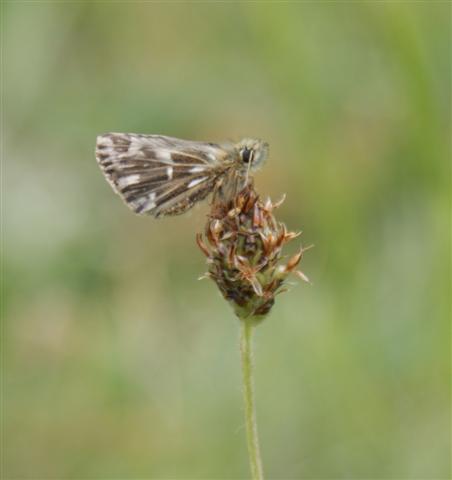
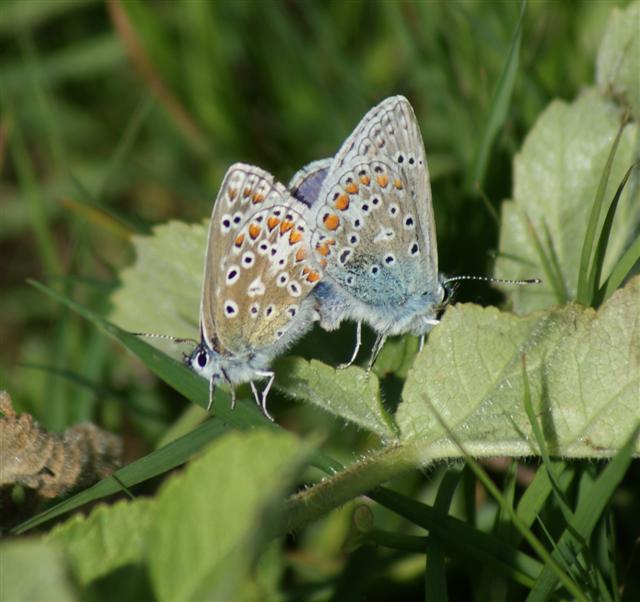
2012 reportsBENFLEET DOWNS & CANVEY WICK 3rd AUGUST 2012Eleven members and two late arrivals participated in the joint branch field trip to Hadleigh Country Park, Benfleet Downs. The weather was a warm 19 degrees, sunny with puffy white clouds with only the small chance of a passing shower.We entered Hadleigh Country Park at the far end of St Mary's Road and, soon after descending the steps, encountered our first target species the White Letter Hairstreak. In fact we found a pair but they were deep in the bushes and not clearly visible. We proceeded along the wooded upper ride beside the sucker elms favoured by White Letter Hairstreaks but our passage became very wet and muddy in places, because of the prolonged wet weather this season and the use of the track by mountain bikes. Along this track we also saw Small Whites, Meadow Browns, Gatekeepers, Ringlets, Speckled Woods, Holly Blues, Commas, a Peacock and a Red Admiral and, fortunately, no one slipped into the muddy pools which was a real concern to me a walk leader. As the track widened out into a sunny grassy glade we found Small & Essex Skippers, Green Veined Whites and a little further on another White Letter Hairstreak perched on a bramble flower which was clearly visible to the party and afforded a good photo' opportunity. Towards the end of this long grassy ride we found Marbled Whites and a pair of Large Skippers. We stopped to rest a a viewpoint to see the sea and saltmarshes of the Thames estuary, Hadleigh Castle and the back entrance of the London 2012 Olympic Mountain Biking venue at the Salvation Army's Hadleigh Farm. We returned by the lower ride, also known as adder alley because the snakes are often found there, in the hope of finding a Wall butterfly. The normally arid and warm local ground conditions that the adders like along this ride are also favoured by the Wall, but try as we might we could not find a Wall here today. We did, however, find Large Whites, Holly Blues and the locally scarce Small Copper along the way which was very pleasing. Back at the steps down from the entrance we met two members from Watford, who said they had just seen a very worn Silver Washed Fritillary on bramble flower along the upper muddy-puddle riddled ride. We chose not to go and look for it as the thought of going back through the ooze was just too much. At this point five members left, having other appointments, and the six of us remaining took a short drive over to Canvey Island. As there is no car parking at the entrance to the Canvey Wick site we parked at the local Morrisons store car park and we crossed the adjacent new clearway duel carriageway to gain entry into Canvey Wick nature reserve. Fortunately this new road is lightly trafficked or I might have had a second health & safety issue to concern me this day. Once in the site it was immediately apparent that this former brownfield site was very different from Benfleet Downs. It was more sandy and salt tolerant plants with waxy leaves were commonplace. We found three Wall (two male chasing one female) almost immediately; this spurred us on to go deeper into the site. We only saw the Walls for a few seconds as they were caught by a strong gust of wind. So, as the ground conditions looked very good, we went on along a raised dry gravel ride and we found Common Blue, Meadow Brown, Marbled White, Small Skipper, Small Heath, Essex Skipper, Holly Blue and Peacock but no further Walls. We walked back the mile we had gone into the site but still could not find more Walls. We were rewarded with a Painted Lady, only the second I have seen this season, near the entrance, but that was that for the day as a huge grey covered the sun, it got cooler and all the butterflies disappeared. All in all a very successful field trip with twenty two different species seen on the day including three Wall for about three seconds, whisked away on the breeze. David Chandler assisted by Kathryn Birch Marks Hall Field Trip – Sunday 15th July 2012At 10.30 am 30 to 40 members assembled in the Visitors Car Park in bright sunshine – very welcome after the wettest May/June ever. Unfortunately Joe Firmin and Ted Benton who were to lead the walk were unable to be there. Joe was suffering ill health and Ted was unable to get transport. It was very good of Jonathan Jukes, the Head Woodland Manager, to step in and lead us to the most likely areas to see the Silver Washed Fritillary and Purple Emperor.We set off along a path flanked by large areas of grassland and wild flowers. Meadow Brown, Ringlets and Skippers could be seen but numbers were well below what one would expect in such an area. We stopped amongst some small oak trees where Jonathan hoped Purple Hairstreaks at low level could be seen, but there were none. On to Thrift Wood, the area most frequented by the Silver Washed Fritillary. Three or four were seen at different places flying round bramble patches but none seemed willing to settle for a photograph. Jonathan gave a short talk explaining something of the history of the woodland and how conifers which had been planted by previous owners were now undergoing large scale clearance. We then moved on to the area where the Purple Emperor is most frequently seen. All eyes scanned the trees diligently but apart from a number of Purple Hairstreaks, a Red Admiral (which caused excitement initially) and a couple of Commas, nothing was seen. Everyone said they were pleased with the walk but really it was a bit disappointing that the numbers of butterflies seen were low. This however is the trend this season for many species due no doubt to the very wet and cool weather experienced from May through to July (and possibly beyond according to forecasts). The species seen were as follows :- SWF (5+),Ringlet (40+), Meadow Brown (20+), Gatekeeper (5+), Large Skipper (3), Small Skipper (3), Red Admiral (3), Large White (1), Comma (4), Purple Hair streak (5+), and Speckled Wood (3). Richard Bigg Over Cutting 19th May 2012The weather the following weekend was back to its usual grey, windy, cool self, idea for the start of Save our Butterflies Week. 14 well-wrapped branch members including a family who had braved the conditions to show these fantastic insects to their children, met at the specially-opened carpark with Trevor Grange, the site warden, for our visit, and hopes were not high of finding our target, the Grizzled Skipper. This is the first visit we have made since the guided bus started running, and the trackway is close to the slope – which is why we do not promote open access to the site, the public bridleway being on the opposite side of the busway tracks. We soon discovered that as they pass, they are fast and pretty quiet, so someone is always on vigilant watch for buses at a distance to make sure no-one is too close as they pass. Trevor Sawyer was the first to spot a Grizzled skipper – roosting on a flowerhead, totally approachable and indifferent to our presence. In all, during the morning, we spotted 4 Grizzlers roosting like this, and the supporting cats was not too bad, with our first brown arguses of the season, a couple of small coppers (which proved amenable to opening their wings briefly if sheltered in cupped hands to warm them slightly) and some green-veined whites. Our walk then took us as usual up tot he top of the cutting bank and into the main mitigation site, far too exposed on the day for anything to brave flying around, but maturing nicely as a grassland site with rocky basking spots, a testament to Trevor Grange's commitment to the site. The two Trevors and one or two others with more determination than most of us stayed on after we left at lunchtime, to visit the mitigation site on the other side of the road, and they did have one or two other Grizzled skippers, one of which was recklessly opening its wings briefly.Woodwalton Fen 12th May 2012After seemingly weeks of dull, cloudy weather, the morning of 12th May dawned much brighter. Six branch members met for an afternoon walk around one of Cambridgeshire's famous remaining pieces of fenland. Whilst there are no longer any specialist butterflies on site, once famous for the large copper re-introduction project of the 1980s, the site would provide us with a selection of generalist species an an opportunity to get out buttterflying in a rather poor spring. We spent a couple of hours exploring part of the reserve, mostly the northern end, and enjoyed excellent close views of Peacocks, Orange tips, Green-veined White, Brimstone and speckled Woods. The first day for a while of sunny (ish) weather also mean that we were able to enjoy Large red Damselflies, Hairy Dragonflies and probably one of the first Four-spotted chaser dragonflies, all hawking busily up and down rides and paths.Devil's Dyke - Sunday 7th August 2011Vince Lea welcomed 12 people to the Branch trip to the Devils Dyke, timed this year to coincide with the peak of Chalkhill Blues, for which this site is famous.The weather could have been better as we assembled in the car park; a strong SW wind accompanied by brief sunny intervals. However, as we proceeded along the top of the July course we were not disappointed and saw many butterflies flying (as well as nectaring and resting) all along the dyke. By the time we had reached the end of the first section at the steps, we must have seen well over 500 Chalkhill Blues, with the pale silvery blue wings of males more noticeable than the dark brown females which are typically on the wing a couple of weeks after the first males emerge. With the wind showing no signs of abating, we chose to stay down and walk along the gallops on the sheltered NW side of the dyke and again lots of butterflies were seen Brown Argus, Common Blues and Essex Skippers as well as the more familiar Meadow Browns, Gatekeepers, and various whites. Having taken well over an hour to walk past the pine trees and reach the middle of section 3, we returned to the car park for lunch and congratulated ourselves on seeing the spectacle of 'clouds' of Chalkhill Blues.
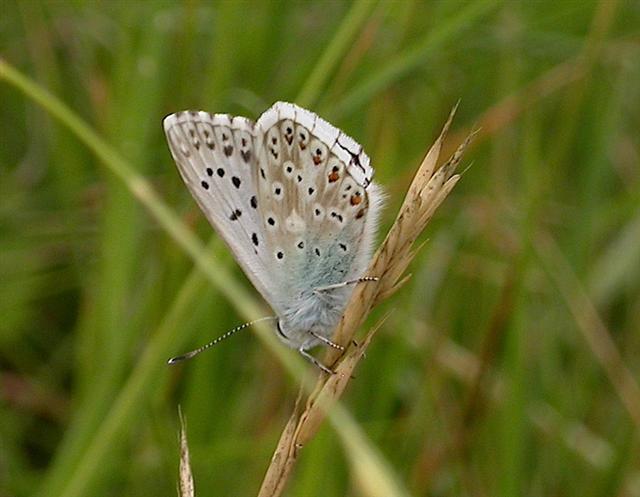
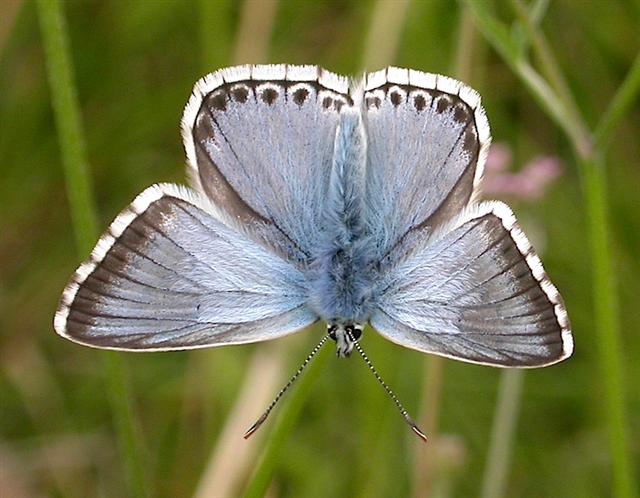
After lunch, Vince took half of the group over the road to explore the golf course section, SE of the car park. This section of the Dyke is not as well recorded as its more famous neighbour but holds good numbers of butterflies nonetheless (and even had Dingy Skipper recorded here a couple of years ago). As we walked through the initial wooded section, we added Speckled Wood to the list and emerged onto the open and exposed top of the Dyke. It appeared even taller and steeper along this stretch and we marvelled at the manpower and skills necessary to construct this defence back in Anglo-Saxon times. Vince told us that much of this stretch (i.e. from the A1304 to the B1061) had been cleared by contractors several years ago, funded by a substantial Heritage Lottery grant. Although much of the slope has subsequently scrubbed over, there were some areas where this was not the case; whether through animal grazing or follow-up conservation work was not known. We also speculated that brushcutting such slopes would present quite a challenge to any intrepid volunteers who were brave enough to undertake such a task. Although not matching the numbers seen on the July course, we estimate that we saw at least 50 Chalkhill Blues along a 1km stretch. A female egg laying on a blade of grass next to the species larval foodplant Horsehoe Vetch prompted Vince to remind us that conservation work for Chalkhill Blue was somewhat easier than Dingy Skipper because CBs overwinter as eggs whereas the latter overwinter as larvae in webs leaving them more prone to damage by grass cutting. A splendid few hours was enjoyed by everyone and the sight of hundreds of Chalkhill Blues was appreciated by all who attended many thanks to Vince Lea for leading the walk. Authored by Tony Moverley Mill Road Cemetery - Wednesday 27th July 2011Save our Butterflies Week - Lunchtime WalkWith the Cemetery looking particularly good following the suspension of mowing earlier in the year, it was good to have a fine day, for a change. Six, shortly seven, of us started out from the Cemetery Lodge, built at the time of the opening of the Cemetery in 1848, where a Small White introduced itself to the group; later we were able to show the difference between that and a Green-veined White which settled close-by; we also saw Large White later. As we moved round the outside of the cemetery in to the more wooded SE section, we did indeed see Speckled Wood and one of the cemeterys most reliable species, the Holly Blue, from the second brood of the year. A large female specimen showed herself on bramble blossom, whilst two males spiralled round a nearby holly tree.
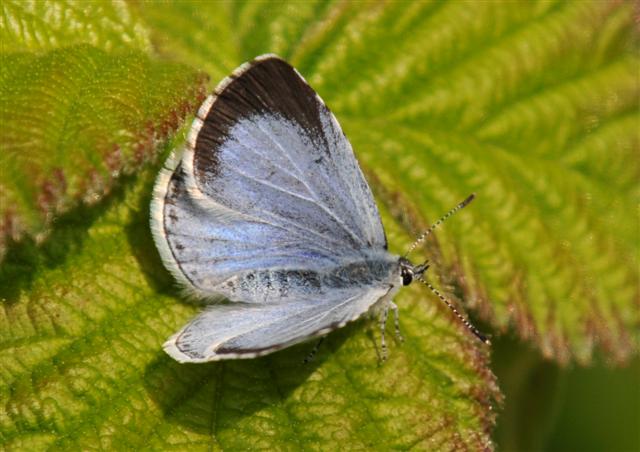
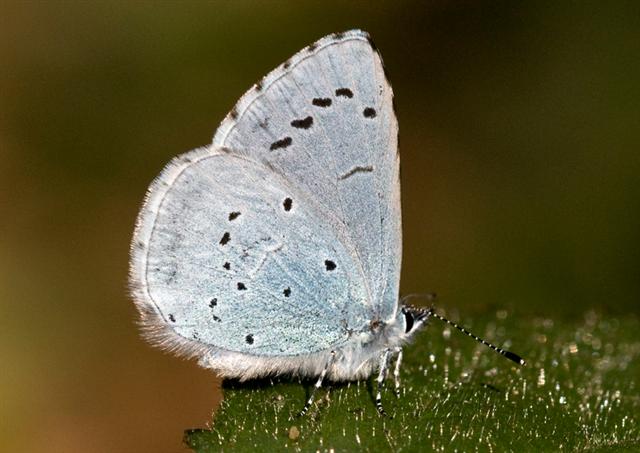
Cemeteries are generally reliable places for Holly Blue. Mill Road is no exception, with a variety of larval food plants on offer (holly, laurel, dogwood, etc) for the first brood and plenty of ivy for the second to lay on. The cyclical nature of host and parasite can also be observed in the Cemetery, as a series of good years for Holly Blue can be followed by a crash in population, as parasite numbers flourish and more larvae succumb to this predation. (Currently numbers are fairly low in comparison to those good years). It was also noted that some of the males we saw were tiny; barely half the size of the female. Whether or not this was a consequence of the drought this year is a matter for conjecture. It may have been a contributory factor, along with high temperatures, in restricting the available food at a crucial time in larval development. Certainly, anecdotal evidence suggests a number of very small examples of some species have been seen this year. Other species such as Gatekeeper, Ringlet and Meadow Brown were also seen; typically the Essex Skippers, Common Blue, Brown Argus and Red Admiral only showed themselves later to add to the 8 species we saw on the walk. That would have been a more representative number for the Cemetery, where some 21 species have been recorded over the last 20 years. Thanks to Cassie and her colleagues from Flora and Fauna International (and Roger!) for coming; I hope you enjoyed the walk and will join in with future Butterfly Conservation events. (I must also extend my apologies to a gentleman who called; Im afraid I lost that message before I got the number). Authored by Nick Ballard Marks Hall - Sunday 17th July 2011After Saturdays almost continuous rain, thirty plus people assembled in the visitors car park hoping for a better day, and although overcast, it was dry.After a brief chat in which Joe Firmin outlined the background to the introduction project, the group moved off walking through the formal gardens and into Thrift Wood. The group split into two, Dr. Ted Benton leading one party on one route and Joe Firmin taking a different route.
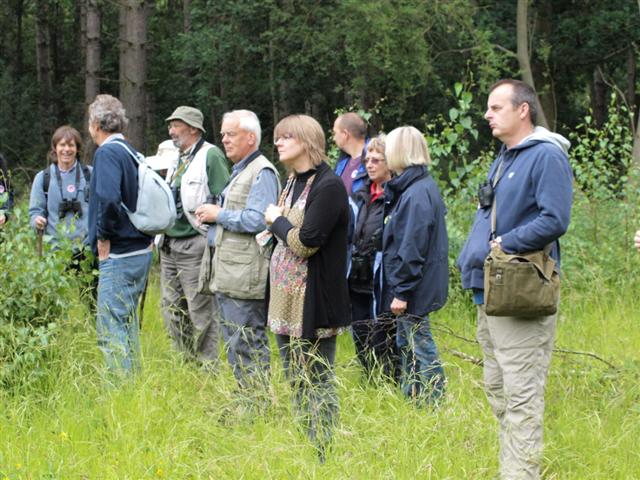
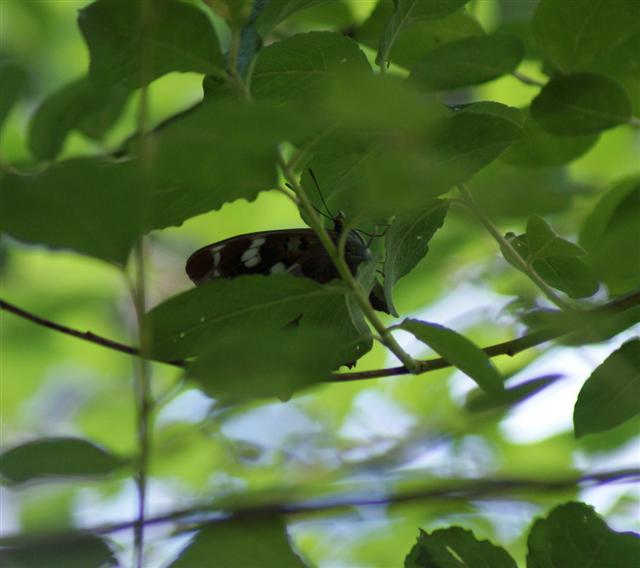
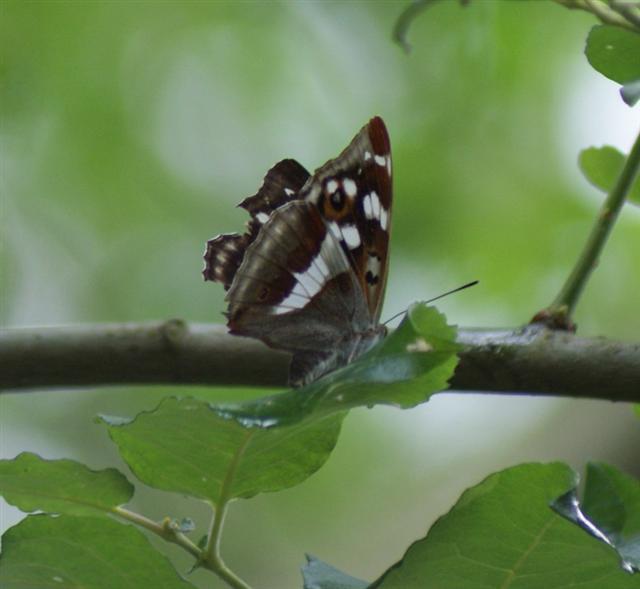
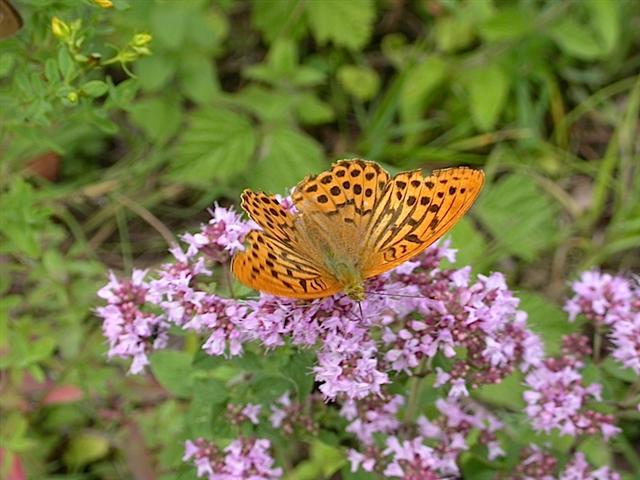
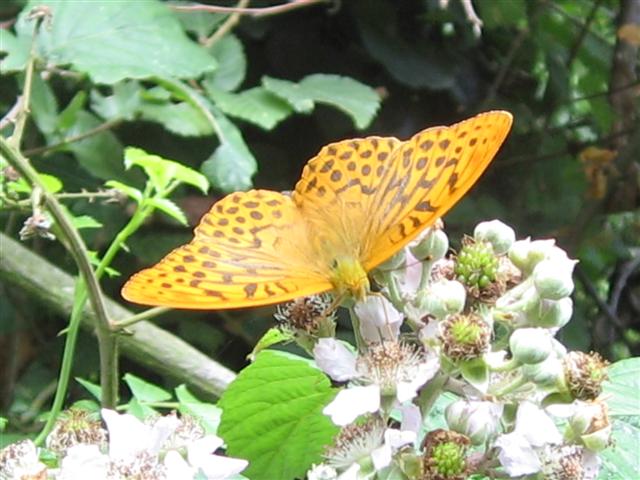
With a lack of sun and a stiff wind only a few butterflies were seen by Joes group Meadow Brown, Ringlet, Gatekeeper and a Small or Essex Skipper. The two parties came together again at a spot where Silver-washed Fritillaries are most frequently seen and Teds party had already seen two. Two more were very quickly spotted on a large patch of bramble. The sun was beginning to put in an appearance briefly now and again and it was noticeable how butterflies suddenly appeared when it did so. We stayed in the area for some time and counted at least five fritillaries, two female and three male. Everyone was able to get the photographs they wanted. Numerous Ringlets appeared with each burst of sun along with Meadow Browns, Gatekeepers and two Red Admirals. The leaders took us on towards the Purple Emperor hot spot and we were caught in a rather heavy shower on the way. Fortunately the heaviest of the rain only lasted 10 15 mins. Arriving at the place where we had seen the emperors last year we hung around hoping for a repeat sighting but the sun refused to show itself and prospects were poor in the overcast conditions, so we drifted on back towards the Visitors Centre. Jonathan Jukes (estate management) took us via an area where they are using pigs to clear undergrowth prior to felling conifers. Arriving back at the Visitors Centre, in more rain, Rob Smith made us all envious. He had lingered on behind us and in a burst of sunshine saw and photographed a Purple Emperor which he thought was ovipositing on a young sallow bush So it was that we achieved both our target species just !!!!
The total species count was 16. Dozens of Meadow Brown and Ringlet, lesser numbers of Gatekeeper, Red Admiral (3), Green Veined White (3), Speckled Wood (2), Purple Hairstreak (4), singles of Large Skipper, Essex Skipper, Small/Essex Skipper, Large White, Small White, Comma and Small Copper, and of course Silver Washed Fritillary (7) and a Purple Emperor. Not at all bad taking into account the weather conditions. Authored by Richard Bigg Bedford Purlieus and Barnack Hills & Holes - Saturday 9th July 2011An enthusiastic group of ten butterfly-ers gathered at the designated parking area at Bedford Purlieus, north-west Cambridgeshire, at about 10:30 a.m. It was an ideal morning of mixed sun and cloud that was likely to give us the opportunity to get up close and personal with our quarry in between bouts of the same creatures zooming around at hundreds of miles an hour.The morning started with a (very) brief sighting of a White Admiral by just one member of the partyfrustratingly the only sighting of the day of this typical summer woodland butterfly. We were led through the entrance way that soon opens into a broad, open ride-cum-wild flower meadow. What a delight to the eyes! And the butterflies liked it, too. This ride provided highlights of our first (rather distantbinoculars required) Silver-washed Fritillary of the day, along with Large and Essex Skippers, Small Copper, Brown Argus, Marbled White and a few commoner species. We stuck to the main rides and kept a leisurely pace. At one point, the thoughtful wardens had placed plastic sheets to attract reptiles and the first four lifted yielded three Slow-worms. In the same area, we began to get our first taste of lazy White-letter Hairstreaks. The highlight of the walk was the Fritillary ride, along which a number of Silver-washes were patrolling and stopping briefly to pose, and several more White-letters were lounging around at waist to shoulder height. We ended the morning strolling down the road that borders the reserve, which included a briefly friendly Red Kite overhead. Back at the car park, we took the opportunity for lunch and several more searches for the elusive White Admiral, before moving on to Barnack.
Barnack Hills & Holes played games with us, finally yielding up about four male Chalk-hill Blues among many Marbled Whites after a considerable walk. We then seemed to enter Lepidoptera corner and our sightings of the pristine male Chalk-hills mushroomed, and our species list grew, including a few second-generation male Common Blues for comparison. Moving on from there, we finally clocked our first and only Small Heath of the day. All in all, a thoroughly enjoyable and profitable days butterfly-ing, with huge thanks to our leader Phil Bromley.
Full site lists: Bedford Purlieus: Essex Skipper; Large Skipper; Large White; Small White; Green-veined White; Purple Hairstreak; White-letter Hairstreak; Small Copper (1); Brown Argus; White Admiral; Red Admiral; Peacock (1); Comma; Silver-washed Fritillary; Marbled White (2); Gatekeeper; Meadow Brown; Ringlet; Slow-worm; Red Kite. Barnack Hills & Holes: Small Skipper; white sp/p.; Small Copper (4); Brown Argus; Common Blue; Chalk-hill Blue; Holly Blue; Comma; Marbled White; Gatekeeper; Meadow Brown; Ringlet; Small Heath; Six-spot Burnet. Authored by Guy Manners Benfleet Downs - Thursday 30th June 2011Blue sky with white clouds bubbling up over the Thames estuary met the assembled group as the hour for the walk came. Eleven people (Den & Ian Black, John Lepley, Paul Hudson, Tony Moverley, Nick Akens, Peter Purze, Rodney Cole, Dave Matthews Mr Holland & I) turned up for the field trip; a good turnout for midweek event.We cautiously descended the slippery muddy path from the St Marys Road entrance to the park and we immediately saw two Purple Hairstreak on a small oak affording a good view of their undersides to all the party. Continuing down, at the bottom of a flight of steps we turned right into a small ride with sucker Elms on each side where we immediately found White Letter Hairstreaks flitting around the tops of the branches. It was good to see the target species so soon after the start of the walk. The sunlight had warmed up the ride sufficiently for grassland loving butterflies like the Meadow Brown and Ringlet to appear. We then saw Large White, Small White, Green-veined White, Peacock, Holly Blue, Small Skipper and Commas. Further along the ride we found White Letter Hairstreaks lower down nectaring on bramble blossom. Everyone was enjoying the spectacle and good photographing opportunities presented themselves to the group because the White Letter Hairstreaks were docile. Then, all of a sudden, there was a shout, come and look at this, its a Silver Washed Fritillary. At first we couldnt believe our ears as this butterfly has not been recorded on the Benfleet Downs transect and its sighting would be a first if confirmed. Fortunately, the big orange butterfly settled on a large bramble patch and we were able to confirm the sighting to be a superb male Silver Washed Fritillary. After everyone had a good look at the SWF, still excited, we moved on. We all then had an interesting impromptu debate about a Gatekeeper that turned out to be a small and oddly marked Meadow Brown - after quite a long period of deliberation. At the end of the narrow ride the path opens up into a flower meadow and here we found Large Skipper, Essex Skipper and Marbled White. We then walked on along a ride locals call Adder Alley, for obvious reasons, and looked at large oak tree where Purple Hairstreaks are found and saw three there today. We then diverted off the transect route and passing through a section of downs grassland, arrived at the viewpoint where we could see all the way to Leigh on Sea and over to North Kent. Turning back, retracing our steps to the transect route it became overcast and fewer butterflies were seen. We then walked parallel to our outward route and passed along a long straight ride where I have found the Wall in August in its dryer sunny sheltered places. At the far end of the ride we rejoined the narrow ride leading back towards the steps and our cars. Finishing with a flourish, we found the two Purple Hairstreaks on the small oak again and by the top of the steps, a Red Admiral.
Sixteen different species of butterfly were seen on the walk plus a Humming Bird Hawk moth and a slow worm were seen. All in all, quite a good total for the day. Authored by David Chandler Langdon Hills - Sunday 22nd May 2011Ten of us met Graham Bailey at the Westley Heights car park for a guided walk around Willow Park, one of the Essex Wildlife Trust reserves at Langdon, with the hope of seeing Grizzled Skippers and more besides. In sharp contrast to the previous days beautiful weather, today appeared less promising; sunny intervals and a strong gusty breeze so we thought we may have our work cut out.We started in Flax field where we saw several Common Blues and a single Mother Shipton moth. A Common Lizard scuttled through the grass, enabling most of us to get a good view before we moved into the adjoining Great Lodge field historically a good site for Grizzlies. Once again, Common Blues revelled in the breeze and Burnet Companions were seemingly everywhere. After a thorough search, we eventually tracked down 3 Grizzled Skippers with one seen actually egg laying on Creeping Cinquefoil Potentilla reptans, the larvas preferred foodplant. With cattle in Home field preventing entry, we moved onto Knights field (by way of Little Lodge and just several Burnet Companions) where we found 2 more Grizzled Skippers.
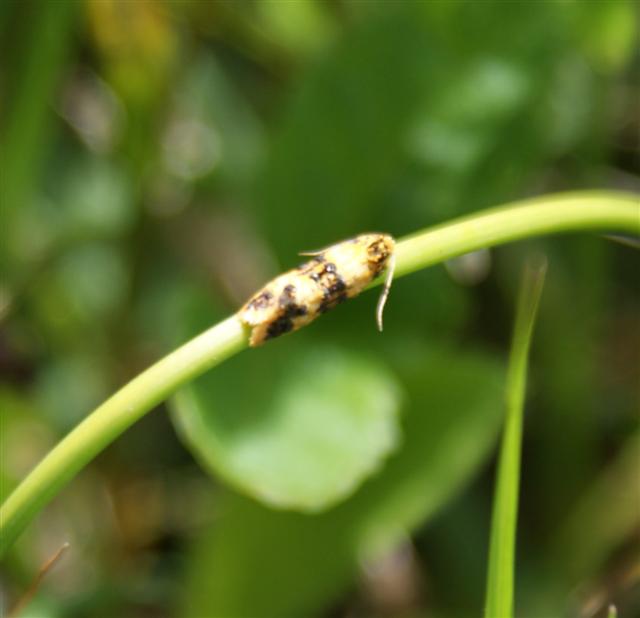
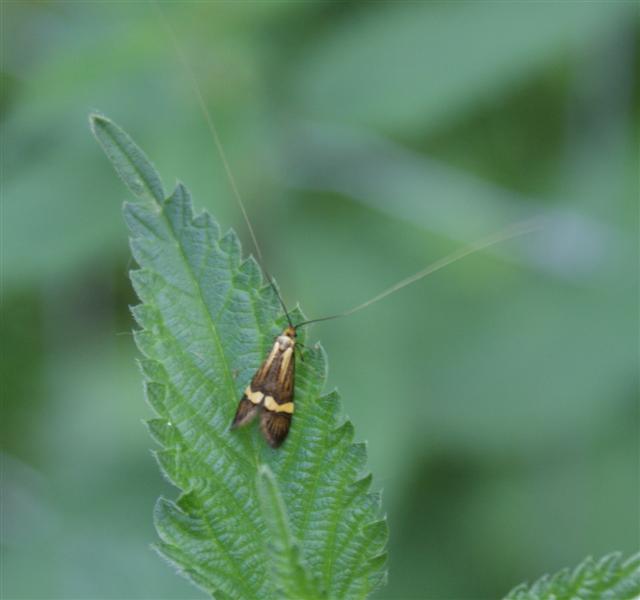
On the way back, we stopped off in Flax field again; but this time we were successful in finding Grizzled Skippers; two more making a very respectable total of 7 for the day. We were also able to add Speckled Wood to the list. Here too we found a beautifully marked micro-moth Commophila aeneana, a scarce moth nationally but known to be locally common here. Several more Speckled Wood and a Silver Ground Carpet along with 3 specimens of the longhorn moth Nemophora degeerella with their spectacularly long antennae catching the sunlight were seen along the track out of the reserve and back onto Westley Heights.
With the wind showing no signs of weakening and the sun remaining intermittent, most took the opportunity to depart for a late lunch and we congratulated ourselves on gathering quite a respectable list of butterflies despite the adverse conditions. However, with the hope of seeing Speckled Yellow in Northlands Wood, Tony Moverley accepted Grahams offer of an afternoon visit to One Tree Hill, part of Langdon Hills Country Park. There was also prospect of a very early Meadow Brown AND of attracting Yellow-legged Clearwings to the VES pheromone lure which Graham had brought along with him. A single Meadow Brown duly obliged in Summerhouse field, the meadow adjoining Northlands Wood, along with our first Small Copper of the day and a Green-veined White, surprisingly the first white of the day! We wandered up the slope to enter the wood along the top track where Graham said the Speckled Yellows favoured the path which here was edged with Wood Sage Teucrium scorodonia, their larval foodplant. Sure enough, while Tony was photographing a particularly striking leaf mine on a dock leaf, Graham shouted Speckled Yellow and one disappeared quickly away from view. We saw several more as we made our way along the track to find the area of oak coppice where Graham has successfully attracted Yellow-legged clearwings the previous year. We positioned the lure at head height in sunshine and waited. After a few minutes without activity, we moved position within the coppice and while waiting for the clearwings, net in hand, two Tree Bumblebees Bombus hypnorum were seen, a recent colonist to the UK and now rapidly expanding its range. Although no clearwings succumbed to the lure, we reckoned we were fortunate to get two of the three target species of the afternoon. Many thanks to Graham Bailey for leading the morning walk at Willow Park and continuing on in the afternoon to One Tree Hill a thoroughly enjoyable day was had by all. Authored by Tony Moverley More Photos can be seen here: By Janet Edmunds
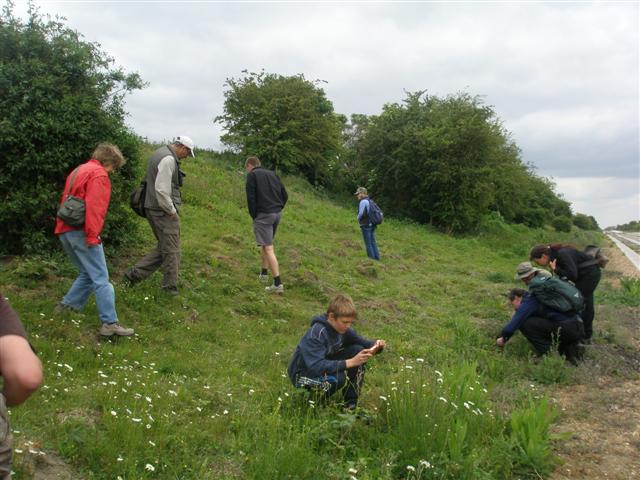
Over Railway Cutting - Sunday 15th May 2011With thick cloud cover and a fresh NW wind blowing, 10 optimistic members met site warden Trevor Grange and Cambridgeshire Conservation Officer Vince Lea for a guided tour around the Over sites.We started walking along the cutting, much of which still remains after the construction of the Guided Busway (still not operational). With few butterflies actually flying, we were able to concentrate on finding roosting insects; and reckon that we did well in the circumstances with a total of 4 Grizzled Skippers found clinging to the tops of flower heads (3 plantain and 1 on knapweed). 5 Brown Argus, 7 Common Blue, 1 Orange-tip, 4 Small Heath, 4 Burnet Companion, 2 Yellow Shell and a single Treble-bar formed the supporting cast. The lack of distraction of flying butterflies meant we were more focused than usual at looking carefully at the undergrowth and we were rewarded when Trevor Grange found a single Grizzled Skipper egg on the underside of a Creeping Cinquefoil (Potentilla reptans) leaf, quickly followed up with two close by. Louise Bacon identified the beetles which was frequenting many of the Ox-eye daisy heads as Oedemera nobilis with a common name of Swollen-thighed Beetle or 'Thick-legged Beetle'; the reason for the name becomes obvious once you take a careful look. Having spent over an hour in the cutting, we climbed up the slope and into the SE end of the main mitigation site (adjoining the windmill) which is under the management of the Wildlife Trust and is officially private land, but we had permission to walk its length as part of the field trip. Here it was distinctly cooler and windier but fascinating to see Trevors latest habitat creation rectangular areas of heat absorbing stones underlain with a permeable membrane (to reduce the amount of growth that might arise through the stones) and edged with Creeping Cinquefoil which it is hoped will grow over the warmer stones; it is the leaves overlying the warmer stones on which Grizzled Skippers are though to prefer to lay their eggs. As we strolled back towards the road through the site, we spotted the occasional insect in flight; Small Heath, Common Blue, Brown Argus and a single Mother Shipton all braved the conditions albeit somewhat briefly. It was encouraging to hear from Trevor that this years maximum counts of Grizzled Skipper have been 15 in the cutting and 4 on the Windmill mitigation site.
After lunch, Trevor took us over to another mitigation site, lying NW about a quarter of a kilometre from the road. It was good to see just how quickly it was maturing since our visit this time last year and to hear that 2 Grizzled Skippers had been seen on this site already this season. Trevor has also created several stone heat sink areas here too. We finished off by walking over to yet another mitigation site (partly connected with the A14 widening scheme); at this stage it is just an arable field taken out of production with its top soil scraped off and banked up on the NE side. The blue fluff (closely resembling the rubbish you empty out of your vacuum cleaner) which covered much of the banks and edges of various scrapes and ponds turned out be substrate for some recent hydro-seeding; dormant at present given that no significant rain has fallen on the site for over ten weeks.
Looking at this new site, it was difficult to imagine that it could ever support a diverse array of fauna and flora; but we then recalled that it was only three or four years ago that that the Windmill site looked in a similar depressing state; all in all, a real tribute to Trevors vision and ability. Authored by Tony Moverley |
||||
|
|
| All page content on this Web site is Copyright © 2000-2019 Butterfly Conservation unless otherwise stated |
|
| Legal Information and Cookie Policy |
|
| Butterfly Conservation is a Company limited by guarantee, registered in England (2206468) Registered Office: Manor Yard, East Lulworth, Wareham, Dorset BH20 5QP Charity registered in England & Wales (254937) and in Scotland (SCO39268) VAT No. 565 9070 16 |
|
|