| Butterfly Conservation |  |
| 40 years of saving butterflies, moths and our environment |
| Butterfly Conservation | |
| 40 years of saving butterflies, moths and our environment |

|
|
|
WORK PARTY REPORTS - Latest
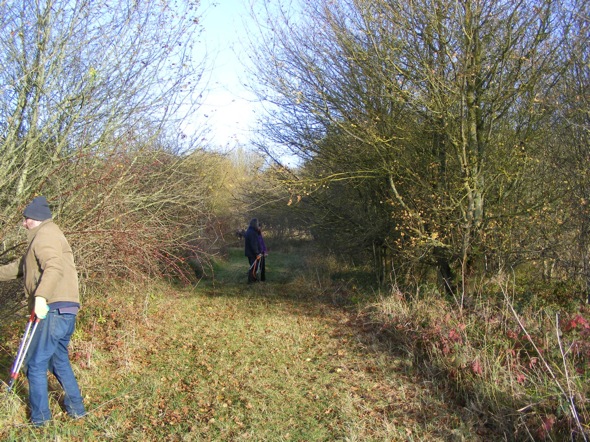
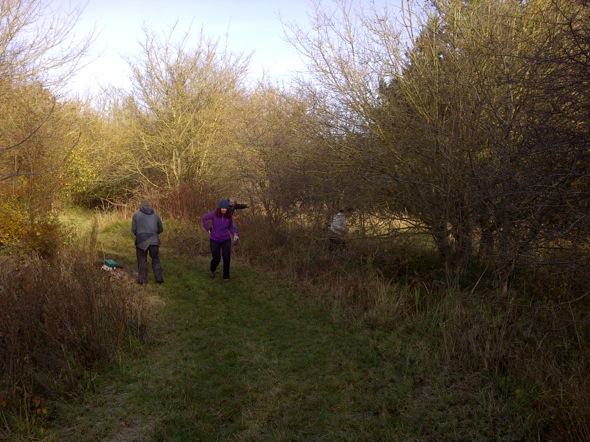
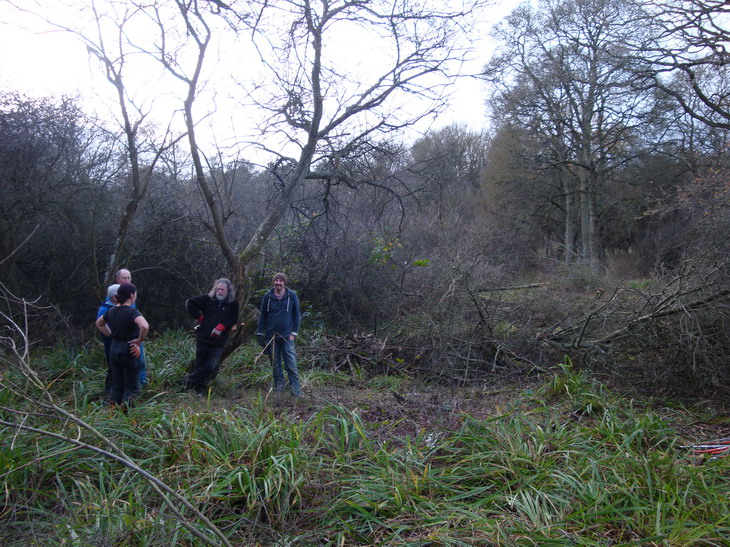
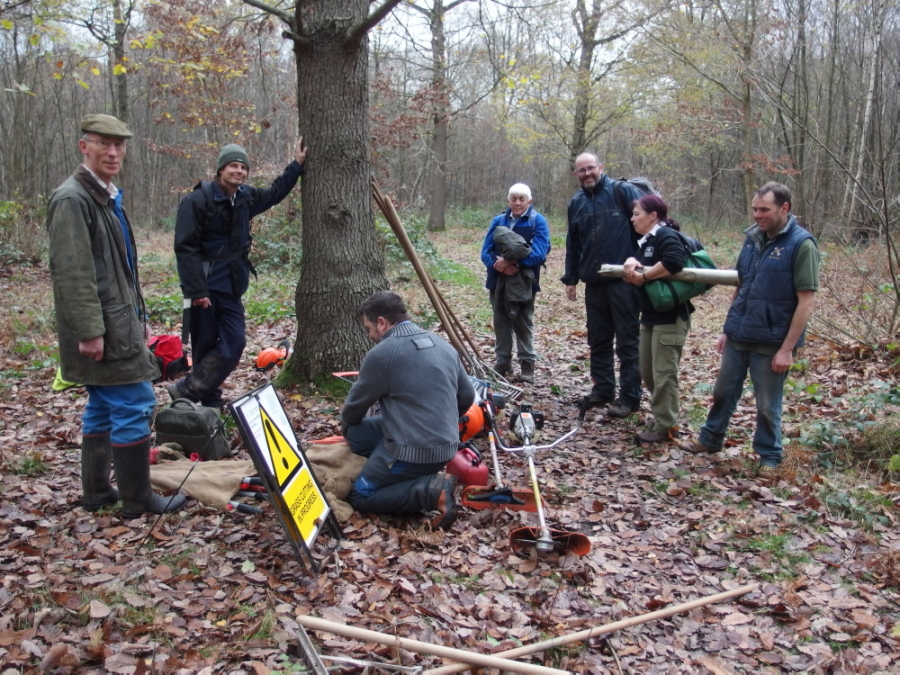
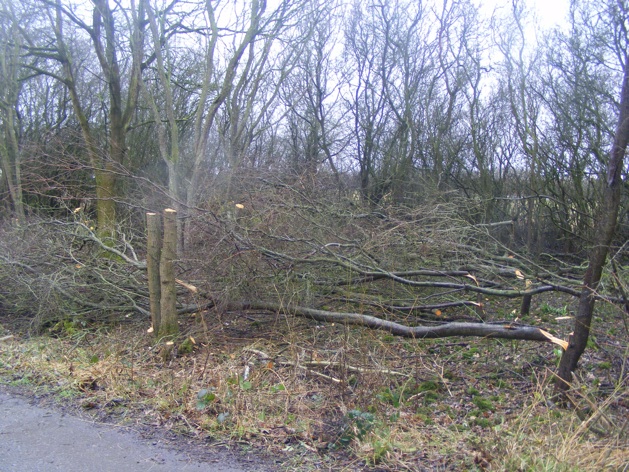
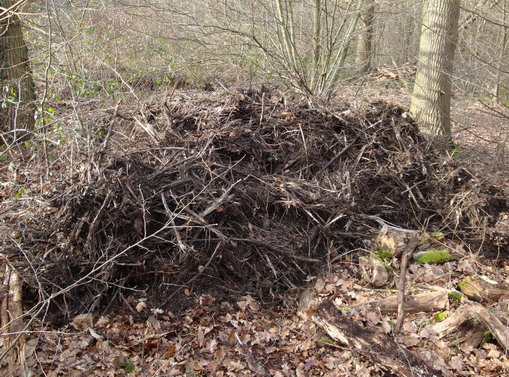
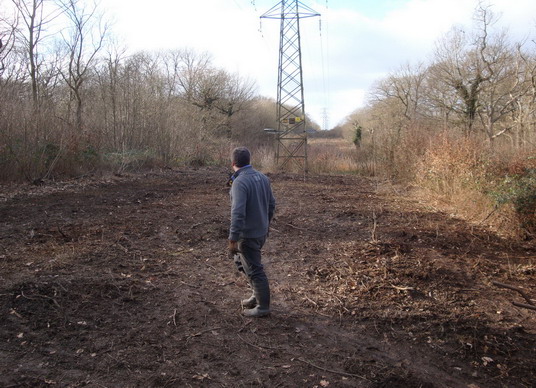
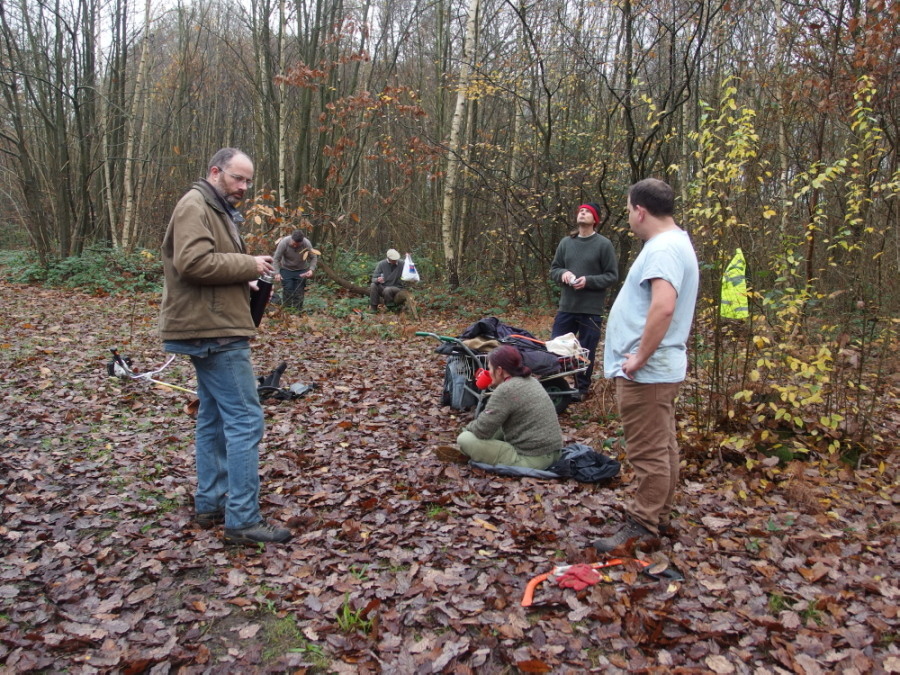
Castor Hanglands - 19th November 2017Our first workparty for the Back from the Brink (#BftB) was well attended, despite a last-minute change of location. Our work, guided by Susannah O’Riordan, the BftB Rockingham Project officer, was to remove trees along a broad, grassy ride edge to make a widened area suitable for the forthcoming chequered skipper re-introduction (2019). Our work is in an area of the Forestry commission land adjacent to the NNR which cannot be done by the mechanised FC folk. What was at 10am a grassy ride with trees against both sides became, by 3pm, a much wider open area of twice the starting width; although the larger tree trunks are still upright, with no branches on them a quick whizz from a chainsaw will bring those down too.What a delightful simple task - cut down trees, pile but stuff against the back edge of the cleared area ready for disposal later. No terrain issues or power tools, a lovely sunny day, and the volunteers from as far afield as London edge and Kettering got a large amount of trees cut down. Susannah hopes to have additional workparties through this coming winter to do more on this ride, so do check back to our events when we have more dates set. Vince Lea (Cambridge) was in charge for BC, and the volunteers were Louise Bacon (Cambridge), Rob Smith (London), Robert Smith (Kettering), Bob Johnson (Peterborough), Paul Fisher (St Ives), Roger & Sarah Orbell (Godmanchester). The photographs show the same area before we started and when our days work was done - I’m sure you can all see the difference.
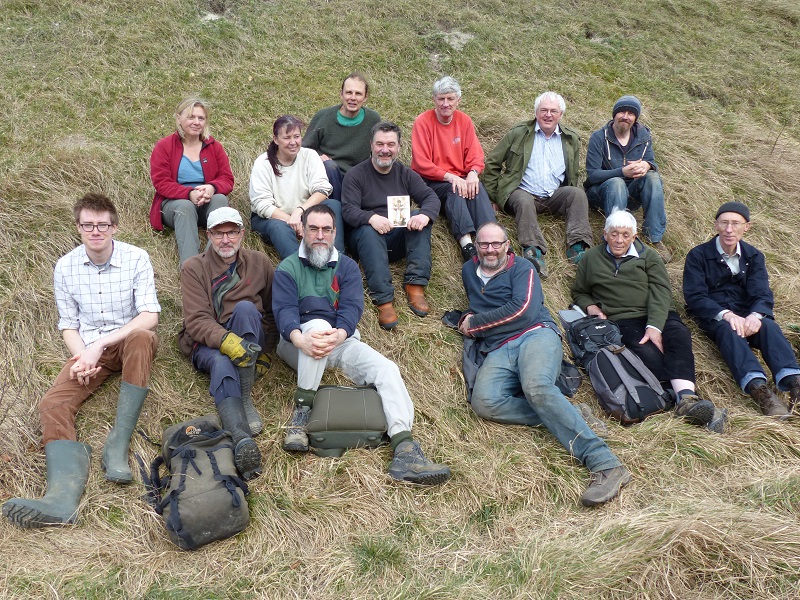
Authored by Louise Bacon Devil's Dyke - 15th October 2017The first workparty of the season, the morning after our branch AGM, was our regular session on Devils Dyke. The target area this year was the section of the dyke by the first gap..... a somewhat scrubby edge to the grass here. A small group of us gathered, mostly new volunteers, and Vince got everyone started whilst Louise got the brushcutter going. As usual, the work was cutting down trees along the bottom of the dyke by hand, whilst the brushcutter team (Louise & Vince) cut the grass and scrub along this years 50m length of dyke. Despite what seemed a small turn out, we achieved our target section, and hope that the Chalkhil Blues and other species appreciate our efforts.Thank you to everyone who attended, and a special welcome to Meleena Walsh and her daughter Emilia, with friend - they had to leave at lunchtime as geography homework beckoned, despite this being way more fun than school work. Authored by Louise Bacon Devil's Dyke - 19th March 2017The end of an era....Our final workparty of the 2016-17 winter was also the final workparty which John Dawson attended as our tools officer and stalwart. John and Kathryn are moving west, and at lunch we arranged a little farewell cake and card, see photo below. But we did do some work too, with a big turn out we cut our random sections of grassland as we do on the section of dyke beyond the pines, a management pattern favoured by the Dingy Skipper. Some bigger trees were taken down too, but mostly this section is now sparser short birch regrowth and grassland.
Thank you to all who turned out on a lovely March day; Vince Lea, Louise Bacon, Rob Smith, Mike Gittos, Guy Manners, Rob Mills, Dave Seilly, Richard Fowling, Martin Heywood, Graham Smith, Marcus Rhodes, and especially to Sharon and Mark for the cake and photography, and of course to John himself for years of commitment to our workparties in Cambridgeshire & Essex. Authored by Louise Bacon Dodds Grove - 13th November 2016Mild weather made for excellent working conditions for our annual work party at Dodds Grove. With Heath Fritillary numbers dwindling at this site, the work was more concentrated on coppicing around the edges of the glades to establish bare ground for the Common Cow Wheat to colonise. Fortunately, there were plenty of volunteers on hand to cut back scrub and coppice Birch, Oak, Hornbeam and Sweet Chestnut. John Dawson was the only member of the party brushcutting and others raked up the arisings. Our Regional Advisor, Sharon Hearle also chipped in, as she is in the process of assessing the winter's work at all the Heath Fritillary sites in Essex. We were particularly pleased to see Dodds Grove veteran Don Down from the South Essex Natural History Society and Richard Bigg, our outgoing Conservation Officer.
Thanks to the 12 who took part, Jo & Chris Kastel, Amy Ross, Don Down, Sharon Hearle, Louise Bacon, Richard Bigg, Vince Lea, Martin Heywood, Graham Smith, John Dawson & Rob Smith. authored by Rob Smith Devil's Dyke 23rd October 2016A fair turnout in pleasant sunshine for the first work party of the season at Devil’s Dyke. A 50-metre stretch of grassland was brushcut, raked and cleared of scrub to promote the growth of Horseshoe Vetch, the larval host plant of both the Chalkhill Blue and Dingy Skipper. During the day, there was a male Brimstone disturbed from roost from within a small Walnut Tree sapling that was being cut. Some small moths such as Plume moths and probably Common Marbled Carpet were also disturbed. Vince Lea, the Conservation Officer for Cambridgeshire, also surveyed the stretch of grassland beyond the pines where we will be working next March and noted how the birch trees that we coppiced last spring had shot up again in the vigorous growing conditions this summer.Thanks to all who attended, Mike Gittos, Ann Piper, Marilyn Peterken, Marcus Rhodes, Dave Seilly, John Dawson, Louise Bacon, Vince Lea and Rob Smith. Authored by Rob Smith Devil's Dyke 20th March 2016A good turnout and sunny spells made for a very enjoyable work party alongside the racecourse. Although suitable for Chalkhill Blue, the brushcutting was aimed at the Dingy Skipper that prefer small areas of very short sward next to longer grass that was left. So rather than cutting a small section of the Dyke, patches were cut over a 300-metre stretch, centred on ‘The Pines’. There were sufficient numbers to rake off all the cuttings and also to carry out a lot of thinning of trees and scrub on the ditch bank to prevent too much shading on the lower part of the Dyke, but without removing too much of the windbreak that it provides. It was noted that The Jockey Club had carried out similar thinning on the lee side of the Dyke, which should promote greater flora. Although cool in the breeze, there was enough sunshine to tempt out an early Peacock butterfly and 2 Mottled Grey moths were disturbed from the sward whilst brushcutting. These moths are very localized in East Anglia and feed on the Hedge Bedstraw found on the Dyke.Thanks are due to the Work Party members Many thanks to all attending: Sharolyn Parnham, Rob Mills, Martin Heywood, Richard Fowling, David Seilly, Louise Bacon, Mike Gittos, Vince Lea, John Dawson and Rob Smith.br> Rob Smith - Records Officer (Essex). Langdon Hills 24th January 2016The morning was dry, overcast and very mild when we assembled in the car park of the Visitor’s Centre at Dunton. Nine of us, distributed in three cars, followed the Warden, in an EWLT vehicle carrying the tools, to Knights Field in the northern part of the Langdon Meadows complex. This meadow is traversed by the Butterfly Transect walked in this area, and where the Grizzled Skipper has been seen, albeit in small numbers.The object for the work party was to enhance conditions in the meadow for this butterfly. The field had been covered in scrub consisting mainly of hawthorn and rose but had been flailed some time previously. There were numerous thicker stems which the flail had left, together with cut debris. Also scrub remained in the corners of the field which the flail could not reach. We set to work clearing what was left. The best habitat for the Grizzled Skipper embraces areas of bare ground which warm up in the sun. The butterfly spends a good deal of time basking on this bare ground. To cater for this we skimmed off the top growth of grass, moss etc. in a number of places across the field and, to increase the warming effect, built the skimmed turf into a heap on the North and East side of the patch to provide some shelter from the wind. Jonathan the Warden indicated that he was very pleased with what we had accomplished. Thanks are due to the Work Party members Mark Bunch, Martin Heywood, Graham Smith, Zoe Ringwood, Louise Bacon, Rob Smith and Vince Lea. We were also joined by a non-member, Amy Ross, a student who previously attended a Course at Writtle College and is now working towards higher things. Richard Bigg - Conservation Officer (Essex). Brampton Wood 6th December 2015It is four years since the branch worked on the best area for Black Hairstreaks in Brampton Wood, glades 1 and 2. These two sites are relatively close together, and the long-term aim is to link them to create a large and resilient butterfly population, that is capable of producing surplus butterflies to colonise other parts of the wood. It has also been decided that these glades should be made more publicly accessible and better known to the butterfly watchers who come from far and wide to see this elusive rarity. The area between the Main Ride and glade 1, where we worked 4 years ago, is now a solid thicket of young blackthorn growth looking absolutely ideal for breeding butterflies, but the glade area itself was very overgrown, making access difficult and viewing of any butterflies practically impossible. There was not a lot of room to work in, and we had a big group of volunteers keen to help, so over half the group moved on to glade 2. The main butterfly watching area of glade 2 is in absolutely perfect condition, it's clear that the local volunteer group have been looking after it over the last few years! The area between the two glades had several very large, over-mature blackthorn stems and an assortment of other small trees so it has potential to develop into Black Hairstreak habitat.We set to work on the two glades which needed the very different treatments - glade 1 was initially a case of opening up the edges of the paths, until we could get into the glade area and clear four years of bramble growth back to create a wide viewing area, and extending back towards the ride edge a second vantage point. This took us to lunch time. In glade 2 it was big trees all the way, with Louise on the chainsaw making great inroads into some of the competitor tree species that would shade out the potential blackthorn thicket we are hoping to create, while the others helped clear up and layer blackthorn stems to rejuvenate their growth. During the lunch break, we were alarmed to see a large Hornet come out of the hollow hawthorn next to us, and later it returned, apparently carrying something... the tree was inspected but it did not appear to have a Hornet's nest in, rather, the Hornet seemed to be hibernating in there. We wondered whether it is usual for them to stock up a larder for the hibernation period? We carried on for another hour or so after lunch, getting some serious layering done in glade 1 to finish off the work there and making a better access route into glade 2, ready for the hordes of visitors we hope will come to Brampton Wood in 2016 to admire the Black Hairstreaks here! Several of the volunteers had not seen the species in this site, so there were plenty of pledges to come and see them in the summer and admire the fruits of our labour. It was particularly good to welcome several new recruits to the volunteer team, following our appeal in the recent branch newsletter, and we are also very grateful to the three who came up from South Essex - reciprocating the visit several of us Cambs folk made to Dodd's Grove the week before!
Many thanks to George Cottam, reserve warden, who helped get us started in the morning, Roger Orbell, co-warden of Brampton Wood and Black Hairstreak officianado, and the whole volunteer group of Nick and Jeremy Milne, Bryan Russell, Peter Biggs, Jackie Hodgson, Rob Smith, Martin Heywood, Graham Smith, Sarah Orbell, Louise Bacon and Rob Mills. Vince Lea - Conservation Officer (Cambs). Dodds Grove - 29th November 2015Despite the threat of rain as we all motored to our destination, it did not materialise and we had a dry, if very windy day. Nine of us, carrying the tools, proceeded down the path to the work area. On previous occasions at this site, we have worked in the small area before lunch moving to the larger area after lunch. Since there were more of us than usual we split in two, and worked both areas together, with one brush-cutter in each. Following the information given us by Tom Brereton in his talk at the AGM I wanted to try a different approach to the brush-cutting. Instead of cutting a large area, we cut small areas (approximately 4 to 6 yds. Across) very close to the ground leaving the surrounding vegetation untouched. The intention was to obtain a temperature gradient between the warmer cut area and cooler growth around. Heath Fritillary larvae, we were told, are very sensitive to temperature and move about until they find the temperature that suits them.Whilst the two brush-cutters were at work, other members of the party coppiced areas adjacent to the open areas and removed other trees to let more light in. All cut vegetation and coppiced material was raked up and deposited at suitable points round about in the shade, often making them barriers to the footpath which keep the glade less trampled in summer.
Thanks are due to Mark Bunch, Louise Bacon, John Dawson (who maintains the tools in such good condition), Don Down, Martin Heywood, Vince Lea, Rob Smith, Graham Smith. Richard Bigg - Conservation Officer (Essex) Devil's Dyke 11th October 2015The recent ‘call to arms’ was heeded by newcomer, Rob Mills, and his presence was greatly welcomed as it was another poor turnout with a total of only 4 volunteers for the traditional first work party of the autumn. Tools were also at a premium as our usual tool carrier was unable to attend. Fortunately, Rob M, Vince and Louise all brought their own brushcutters and we were able to start cutting a stretch of steep grassland. Meanwhile Rob Smith cleared the few heavier spots of birch saplings ahead of the brushcutters. However, the day wasn’t to progress that smoothly as Louise hit a wasp nest about an hour into the morning session. Despite losing count of the stings she received, Louise was able to carry on with lopping and raking. We did not attempt to address any of the usual peripheral coppicing and scrub clearance in the ditch, concentrating our numbers on good grassland management for Chalkhill Blues and Dingy and we were able to cut and rake our usual 50-metre stretch. The pleasant sunshine tempted out some Lepidoptera – a Large White, probably Comma and Small White, Vapourer moth, plus Ruby Tiger and Drinker moth caterpillars.Many thanks to all attending: Rob Mills, Louise Bacon, Vince Lea & Rob Smith Authored by Rob Smith Devil's Dyke 8th March 2015A fine morning still couldn''t tempt out many members as we again struggled with work party numbers. Some areas were brushcut 'beyond the Pines'. These were subsequently raked to keep the nutrient level down, optimising conditions for the growth of Horseshoe Vetch, the larval host plant of the Chalkhill Blue and Dingy Skipper. There was little scrub to clear this time around, but the birches were thinned along the top of the Dyke and along the ditch to prevent too much shading and seeding of the grassland. Much of the bottom third of the Dyke is now cut by contractors earlier in the working season, so time was also spent raking the remaining cuttings for a considerable length. Despite a cool breeze a few butterflies were observed - Small Tortoiseshells and Brimstones.Many thanks to all attending: Richard Fowling, David Seilly, Louise Bacon, Vince Lea, John Dawson and Rob Smith. Authored by Rob Smith Bedford Purlieus 22nd February 2015After negotiations with Forestry Commission and Natural England staff, volunteers from Cambs and Essex branch and Beds and Northants Branch of Butterfly Conservation were given permission to carry out work at Bedford Purlieus National Nature Reserve in order to conserve the population of Black Hairstreaks. The agreement came too late to get into the B&N newsletter and work programme, and the site is a long way from most of the C&E membership base, so it was perhaps not surprising that only 4 volunteers managed to turn out. Nonetheless, the work required for this species is best conducted little and often, so the four of us were able to make a useful contribution to the small patches of blackthorn along the track on the western side of the wood. The morning started fine and two of us took the opportunity to take an early walk round in the frosty wood, hearing and seeing lots of specialist woodland birds including all three woodpecker species, marsh tits, treecreepers and nuthatches, while one or two red kites drifted over the work site from time to time during the day. By the time we were too tired to do any more work, the rain arrived and we were glad for the excuse to pack up and go! We have planned a field trip in June to see if Black Hairstreak can be monitored on site - do come!Two patches about 100m apart were targeted for work, at TF0368100096 and TF0363700034. Blackthorn occurs over another 500m of track, so we can consider the possibility of working on different patches on an annual basis if this first year's work is successful in rejuvenating and expanding the area of blackthorn. The work involved cutting down small trees in the vicinity of blackthorn patches - mostly hawthorn and a bit of field maple - and then layering the old stems of veteran blackthorns into the cleared areas. Layering is a technique that is similar to the traditional hedge management that is thought to have helped maintain this butterfly population in the past. It involves partially cutting through the tree trunk, but retaining enough bark and wood to create a flexible, living hinge which allows us to carefully lower the trunk to the required location, while keeping the tree alive. From this technique, the tree (which may be carrying overwintering Black Hairstreak eggs) should flower and grow in the spring and is expected to produce a new flush of sucker growth from the roots, producing more vigorous suitable habitat in a few years time. Without this management, blackthorn tends to senesce and lose its viability as breeding habitat for the butterfly. Lots of small, spindly suckers could be seen in the shade of the dense hawthorn and blackthorn scrub, and this material is expected to grow well now that more light has been let into the area.
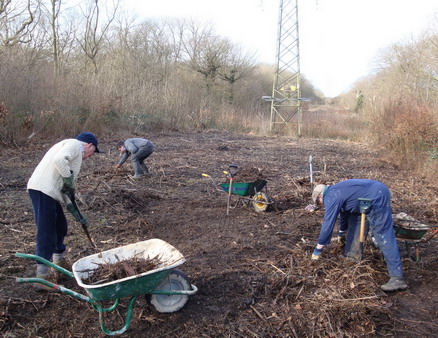
Many thanks to all attending: Vince Lea, Louise Bacon, John Dawson and Lynne Farrell Authored by Vince Lea, Conservation Officer Pound Wood 8th Feb 2015Another new venue for this work party season saw us 'under-the-pylons' at this Essex Wildlife Trust reserve, one of the South-east Essex Heath Fritillary woodlands. Pound Wood is fairly large with a long coppice cycle, about 22 years. However, all of the Heath Fritillary action is along the wayleave at the lowest part of the wood, which has to be managed in much shorter rotation to keep the tree line away from the overhead cables. The central section of this wayleave is split into 3 plots about 40 metres long by 15m wide and is managed in a 3-year rotation, which suits the regeneration of the common cow wheat, thus benefitting the butterfly. However, this autumn saw the Electricity Board bring in the heavy machinery to an area further along that had become too high. Our task was to clear the mulch left behind in the hope of creating some bare ground so that the cow wheat might establish itself in a new plot.Forks and barrows were the key tools in the first session but the going was tough as the mulch was up to 9" thick and some long branches has become compressed in the heavy soil. Progress was slow, but it was necessary to get as much up to prevent the soil from becoming too enriched and more to the liking of nettles. However, this was the worst of it (or we just got the hang of it) and as we moved to higher ground, conditions were drier and the brash could be raked more easily. The day had kicked off badly, with regulars Louise and Vince breaking down on route, so there were just the four of us, but with the warden chipping in, we completed the clearance of an area 40 by 15 metres.
Many thanks to all attending: Paul Hudson, Richard Bigg, John Dawson, Rob Smith and EWT warden, David Harris. Authored by Rob Smith Brampton Wood 25th January 2015A bit of peripheral coppicing to Hairstreak Glade 3 was the main task today - sure sign that management for the Black Hairstreak is nicely under control at this excellent site. The morning session was spent coppicing some of the Dogwood and Hazel to prevent too much shading of the central area of Blackthorn that did not require further layering. All went well and after lunch we were able to turn our attention to 3 smaller areas of Blackthorn that had been recorded close to Glade 3 during our comprehensive survey in spring 2014, when the branch had surveyed the whole wood for Blackthorn last summer with the intention of improving habitat and connectivity between known glades. So these smaller pockets of Blackthorn were improved by coppicing Hazel and Hawthorn to increase sunlight and some of the larger Blackthorns were layered in turn.Thanks to Louise Bacon, Vince Lea, John Dawson, Rob Smith and Wildlife trust volunteer site wardens Roger Orbell (also Branch member) and Tim Fryer for all of their hard work on the day. Authored by Rob Smith Dodds Grove 30th November 2014A dry but misty morning with no wind when seven of us assembled at the end of Poors Lane to walk down the bridleway to the area where we were going to work. We intended brush-cutting part of the small clearing but someone, EWLT or SBC, had been there and the area was already cleared. That left us free to do what we thought was really of more importance - coppicing. The main job was to clear a break through the trees to link the small clearing with the larger one. This we hope will encourage mixing of the Heath Fritillaries in the two areas. We brush-cut a part of the larger clearing, intending to do this in rotation year on year, and also coppiced two “scollops” one in each clearing.
Many thanks to all attending: John Dawson, who we depend on for tools, Louise Bacon, Vince Lea, Rob Smith, Richard Bigg, Don Down and Crispin Froment. The last named is not a BC member but was welcomed to our workparty. Authored by Richard Bigg, Conservation Officer Devil's Dyke - 2nd November 2014There were thoughts of the impossible in the week leading up to this work party as the unseasonably warm weather over the past few weeks had brought about a unique tiny second brood of Chalkhill Blues. Having been sighted the previous weekend, the hope was that this normally-univoltine butterfly might actually be flying during its autumn work party. However, the record warm Halloween weather didn't quite last into the Sunday and instead we all got a good dousing in some heavy morning rain! There was a 15 minute spell of hazy lunchtime sunshine, but the only butterfly seen was a female Brimstone, disturbed from hibernation as we brushcut the bramble at the bottom of the Dyke.Work carried out was the usual brushcutting and raking of a 50-metre stretch of grassland to reduce nutrient levels and encourage growth of Horseshoe Vetch, the larval host plant of both the Chalkhill Blue and the Dingy Skipper. Further scrub clearance along the ditch maximised the area of suitable habitat. Thanks to newcomers Nicola and Richard Jennings who toughed out a tricky introduction, along with Louise Bacon, Vince Lea, John Dawson and Rob Smith. Brightlingsea - 12th OctoberAttention turned to the world of moths for the first work party of the season. Natural England has devised a programme of planting the rare Hog's Fennel, the larval host plant of the Essex speciality Fisher's Estuarine moth. This is to establish new colonies of this very rare moth away from its more threatened coastal locations.A site at Brightlingsea Hall Farm was specially prepared, on the slopes overlooking Alresford Creek, situated between Colchester and Clacton-on-Sea. The prepared area measured 70 by 20 metres and had been fenced, as rabbits are partial to the young plants. Perhaps the most difficult part of the operation was getting the plugs out of the plastic trays without damaging the delicate young shoots. The plugs were then set out at 1-metre spacings using string lines and then planted using spades. The weather was cloudy but pleasant enough and we saw what was probably a Red Admiral flying south. A frantic spurt in the last hour saw the whole plot filled with all 1400 plants, just as a fine drizzle set in. This was to turned to heavy rain in the evening - perfect for watering-in. Thanks to Babara Lock, Jeff Higgott, David Scott, and Mark Cooper (the farmer), Richard Bigg, Zoe Ringwood, Louise Bacon, Vince Lea and Rob Smith. Thrift Wood - 19th January 2014After overnight rain (yes still more to add to the floods !!!) the day turned out to be mild and dry with a good deal of sun, more like a spring day in March or April. The paths through the wood were very muddy but it was OK where we aimed to be working.Following a meeting with the EWT a week or two before, it had been agreed to concentrate on coppicing and clearing minor scrub and tree growth on the northern edge of the southern arm of the 'glade'. Brush-cutting in the glade was to be limited to a strip 4-5 metres wide along the edge of the central growth. The thought was to allow scrub in the glade to grow up and shade out the grass, which, with continual cutting, was becoming thicker. In the event the Warden had marked out an area of the glade to be cut which was rather larger than planned. An area adjacent to that cleared in January 2012 was attacked and cleared of Hornbeam and birch together with a mass of small saplings. Clearing the previous area had generated a good deal of cow-wheat so it is hoped that this will happen in the new area also. The area marked out by the Warden was brush-cut and raked off. Conservation work in this wood has been carried out over many years aiming to preserve/improve the habitat for the Heath Fritillary butterfly, but the numbers have been declining steadily for the last few years. This has been due in part to adverse weather conditions, but also because we think the management regime has not been ideal. Concentration has centred on brush-cutting the glade with only small areas of coppicing. This has resulted in the grass becoming thicker and cow-wheat dwindling amongst it. Also the micro-climate in the grassed area is cooler than on the bare ground in coppiced areas, which is thought to be not advantageous for the butterfly. The maximum count in the flight season 2013 was just three butterflies so it remains to be seen what happens this year. Thanks are due to John Dawson, who looks after the tools and keeps them in excellent condition, and to Vince Lea, Louise Bacon, Rob Smith, Paul Hudson and George Fletcher the Warden, who used them to good effect. Authored by Richard Bigg, Conservation Officer (Essex). Brampton Wood - 8th December 2013After a shocking drop in numbers in 2012, this summer's recovery of the Black Hairstreak was the welcome backdrop to renewed work for this species at Brampton Wood. Last year's work party had been suspended in case any Blackthorn that could have supported over-wintering eggs was inadvertently lost. However, the recovery in numbers at all 5 monitored glades gave us confidence in attempting to create a new breeding area near the entrance, a location where occasional Black Hairstreak had been recorded in the past. The new area was centred on the bend opposite the Visitor Information hut, which contained a high proportion of tall, leggy Blackthorn. By layering these trees, it is hoped that the new regrowth will create the ideal egglaying territory next to previous work on the opposite side of the entrance ride. Initial work involved coppicing unwanted trees such as Oak, Maple and a particularly stubborn Sallow. Brash was withdrawn back into the woods as far as possible and layering began just before a break for lunch. A bit of thought was taken with the direction of lay to get good coverage over open areas and there was considerable heaving around as the bigger blackthorns came crashing down onto the ride edge. Working conditions were perfect with enough sunshine to tempt 2 Peacocks out of hibernation to bask on the roof pantiles of the visitors hut.Participants: Ian Shaw, Louise Bacon, Vince Lea, John Dawson, Graham Smith, Rob Smith Dodd's Grove - 10th November 2013We had a bright sunny autumn day for this Work Party and seven volunteers assembled at the end of Poors Lane. It was a bit chilly to start with but we soon warmed up. A series of unfortunate events left us with no brush-cutters or rakes but there were sufficient saws and loppers, so, under the direction of Don Down, we spent the time cutting down birch, hornbeam and small oak trees to improve the light penetration. The morning was spent working on either side of the path going to the left from the gate. Then in the afternoon we moved to the glade area alongside the path to the right. Ian Brown of the Southend Borough Council came along to join us, with a brush-cutter, but our misfortune continued, as it refused to start.Thanks are due to Committee members Louise Bacon, Vince Lea, Rob Smith and to Branch members Don Down, Joanne and Chris Kastel also Ian Brown of SBC. Thrift Wood - 17th February 2013This Work Party had been scheduled to take place in January but a fall of snow prevented this and it was postponed. It was deemed that the Thrift WP was more important than that at Langdon so we went to Thrift on this date, and the Langdon WP was cancelled. In the event it was a lovely day – mild and sunny with little wind.The very wet season through 2012 had produced vigorous growth in the glade which was considerably higher than in previous years. George the Warden wanted to abandon the management regime we had introduced in 2010 and brush-cut the majority of the area. The BC Conservation Officer did not agree with this entirely, but it was the Warden’s decision and Section 1 and 2 and part of 3 were cut and raked off. It was a pity, since the revised system seemed as though it might be working, 2011 producing the highest count of the Heath Fritillary for some years. In 2012 the cold, wet weather in the flight season, reduced numbers to single figures again. In addition to the brush-cutting, an area on the north edge of the south end of the glade, was opened up by coppicing some of the hornbeam Many thanks to all attending: Louise Bacon, John Dawson and Vince Lea on the brush-cutters, Rob Smith, Richard Bigg and Paul Hudson Authored by Richard Bigg, Conservation Officer (Essex). Dodd's Grove - 2nd December 2012On a bright frosty morning a party of ten assembled at Poors Lane , Hadleigh in South Essex and, carrying brush cutters, saws, loppers and rakes, walked down a woodland path to Dodds Grove. This area is essentially a part of Hadleigh Great Wood being separated from it by only an ancient road/bridleway. Dodds Grove has supported a colony of Heath Fritillary for a number of years since their introduction, and is managed by a small group, members of the South Essex Natural History Society. This is the second year the Branch has helped out with this work.Under the direction of Don Down (SENHS member) the work party set about clearing bramble and other vegetation in an area roughly 100yds by 20yds. A number of Hornbeam and Birch trees were also cut down to allow more sunlight to enter. All the cuttings were raked off and deposited further in amongst the trees. The cutters moved off to a second area, followed by the rest of the party after lunch, where similar clearance was carried out. Though frost remained on the grass all day, it was bright and sunny and a pleasure to be out. As previously arranged, Ian Brown, Parks Management Officer for Southend Borough Council, Joined us and helped with the brush cutting. Rob Smith and myself took the opportunity to walk with him into the Great Wood to discuss the management work being carried out there. Heath Fritillaries are present in this wood also, and are suffering a severe decline in recent years, due, we think, to the rides becoming overgrown. We were pleasantly surprised to see much work had been done to open up areas where the butterflies were most frequently seen, and an area of coppicing was planned. Thanks are due to Committee members Rob Smith, Louise Bacon, Vince Lea, and John Dawson, and also Joanne and Chris Kastel, Sally Brierley and Paul Hudson. Authored by Richard Bigg, Conservation Officer (Essex). |
|
|
| All page content on this Web site is Copyright © 2000-2019 Butterfly Conservation unless otherwise stated |
|
| Legal Information and Cookie Policy |
|
| Butterfly Conservation is a Company limited by guarantee, registered in England (2206468) Registered Office: Manor Yard, East Lulworth, Wareham, Dorset BH20 5QP Charity registered in England & Wales (254937) and in Scotland (SCO39268) VAT No. 565 9070 16 |
|
|